
Expertise

Experience that asks questions.

Clinical experience and scientific work shape how we investigate delphinidin.

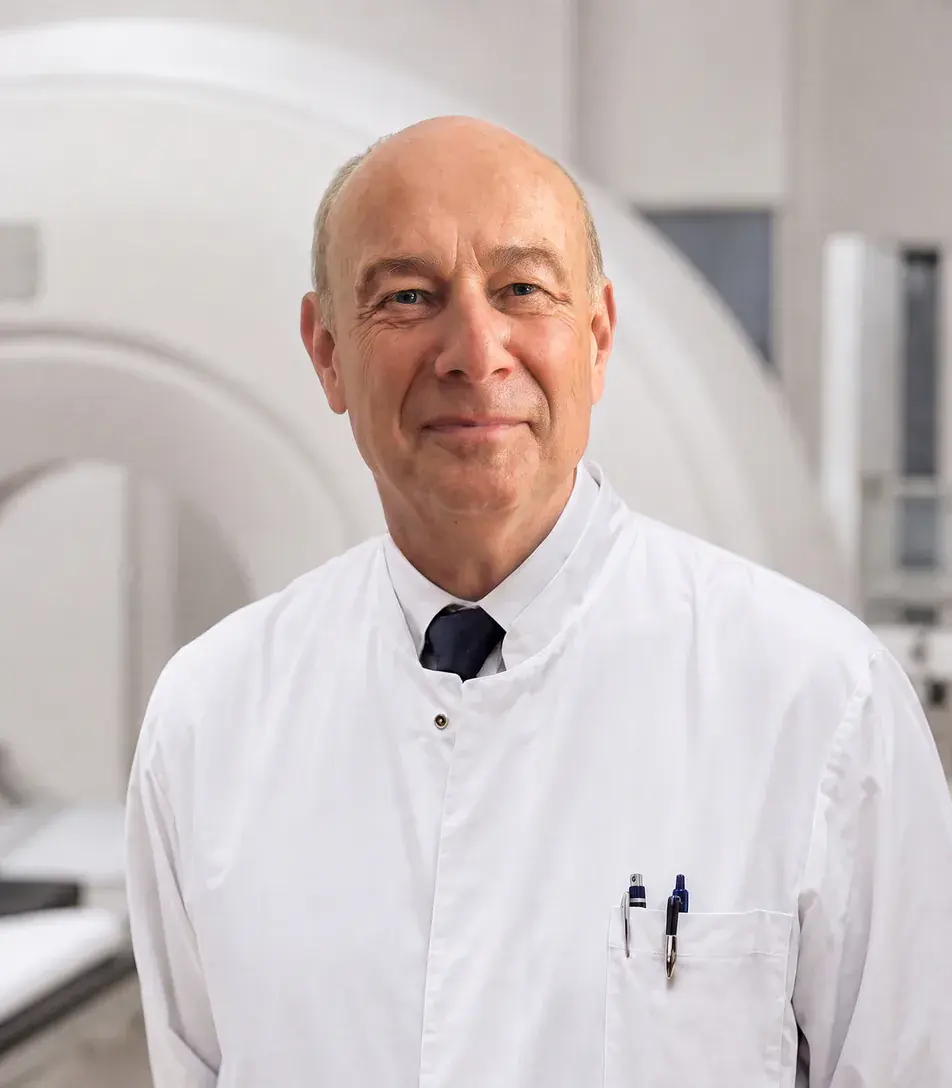
Prof. Dr. med. Dr. h.c. Norbert Roewer
Prof. Dr. med. Dr. h.c. Norbert RoewerFounder · Roewer Medical Care

The person behind PREVAID®

Prof. Dr. med. Dr. h.c. Norbert Roewer

Physician, researcher and founder of Roewer Medical Care. His many years of work in anaesthesiology and organ protection provide the professional background to the research programme.

This experience gives rise to specific questions about cell models, analysis and formulation. Moving from a research question to a statement about a product requires evidence specific to that statement.

01 / Clinical experience

Questions from clinical practice.

Anaesthesiology and organ protection grew out of a clinical necessity: maintaining organ function during major surgery, in circulatory disorders and in severe inflammatory reactions. Because organ failure always goes back to damage in individual cells, the focus shifted from monitoring vital signs to researching cellular protective mechanisms and signalling pathways.

Explore the science

From anaesthesia to the cell

The path from clinical anaesthesia to modern organ protection puts the cell, the smallest functional unit of an organ, at the centre. Protecting organs during a procedure requires an understanding of cellular receptors, ion channels and signalling pathways.

Oxygen deprivation and reperfusion

Major surgery and organ transplantation inevitably involve phases of oxygen deprivation followed by restored blood flow (reperfusion). To understand why cells die in the process and how the sudden influx of oxygen releases reactive oxygen species (ROS), anaesthesiology had to look deep into mitochondrial function and the cell's energy balance.

Anaesthetic preconditioning

The discovery that volatile anaesthetics or certain opioids can protect organs from severe ischaemic damage was a milestone. The effect is mediated by signalling cascades inside the cell, for example via ATP-dependent potassium channels in the mitochondria or protein kinases. Research into this pharmacological protection turned anaesthesiology into a cell-biological science.

Inflammation and immune response

Every tissue trauma caused by surgery triggers a complex reaction of the immune system. Research has examined how anaesthetic agents interact with immune cells such as macrophages or T cells and influence the release of cytokines.

Intensive care and organ preservation

In the care of critically ill patients and organ donors, the aim is to secure the survival of the cells in the organs. Perfusion solutions and ventilation strategies, such as lung-protective ventilation, aim to avoid cellular stress and overdistension injury to the alveoli.

These relationships describe clinical anaesthesiology and intensive care medicine. They are the professional origin of our research questions and not a statement about a food supplement.

02 / Scientific work

Answers through research methods.

How delphinidin (the aglycone) and the delphinidin complex of four glycosides behave in cells and mitochondria is what we investigate in a cross-site collaboration: together with the Fraunhofer Translational Center for Regenerative Therapies in Würzburg and university laboratories in Bochum, Munich, Essen and Würzburg. A broad range of cell-biological, biochemical and microscopic methods is used, including proteomics.

Methods at a glance
  • Cell viability & signalling pathways. Analyses of cell viability, apoptosis and the cell cycle, with particular attention to the mitochondrial signalling pathway.
  • Mitochondria & energy metabolism. Measurement of oxidative stress, reactive oxygen species (ROS) and mitochondrial functions.
  • Morphology. Microscopic and morphological methods.
  • Pharmacokinetics. Analyses of the oral bioavailability and kinetics of the individual glycosides after intake of the complex. This includes the question of whether and to what extent the individual glycosides enter cells.

Methods and research questions are not a statement about an effect of the product. Our published work is linked under Publications. We also hold internal research data.

03 / Publications

Publications of the research group

  1. Antioxidant and genoprotective effects of naturally occurring delphinidin glycosides.

    Mutagenesis. 2026:geag027.

    PubMed ↗︎ (on PubMed, opens in a new tab)
  2. Delphinidin modulates neuroinflammation and behavioral deficits in a Parkinson’s disease mouse model.

    NPJ Parkinsons Dis. 2026;12(1):32.

    PubMed ↗︎ (on PubMed, opens in a new tab)
  3. Stabilization of Delphinidin in Complex with Sulfobutylether-β-Cyclodextrin Allows for Antinociception in Inflammatory Pain.

    Antioxid Redox Signal. 2021;34(16):1260-1279.

    This study investigates delphinidin in combination with sulfobutylether-β-cyclodextrin. It forms part of our research background; the current product formulation uses alpha-cyclodextrin.

    PubMed ↗︎ (on PubMed, opens in a new tab)
  4. Protective effects of tricetinidin against oxidative stress inducers in rat kidney cells: A comparison with delphinidin and standard antioxidants.

    Food Chem Toxicol. 2018;121:549-557.

    PubMed ↗︎ (on PubMed, opens in a new tab)

04 / Patents & developments

Inventions from the research work

Prof. Roewer’s research has led to inventions for which European patents were granted. A selection, arranged by topic.

  1. Formulation

    Formulating anthocyanidins for stability

    A complex of an anthocyanidin, for example delphinidin, and methylated β-cyclodextrin, together with the process for producing it. Research background: the current product formulation uses alpha-cyclodextrin.

    Patent number and official title

    EP 3110890 B1 · Anthocyanidin complex

  2. Subject of research

    Delphinidin and bacteria on objects

    The use of delphinidin on objects contaminated with the bacterium Staphylococcus aureus.

    Patent number and official title

    EP 2854553 B1 · Use of delphinidin against Staphylococcus aureus

  3. Subject of research

    Delphinidin complex as a medicinal substance

    A composition containing a complex of delphinidin and sulfoalkyl ether β-cyclodextrin, claimed as a medicinal substance.

    Patent number and official title

    EP 2919791 B1 · Delphinidincomplex as antiphlogistic or immunosuppressive agent

  4. Subject of research

    Delphinidin combined with a signalling protein

    A composition of delphinidin and the signalling protein TRAIL, claimed as a medicine.

    Patent number and official title

    EP 2931286 B1 · Delphinidin for combating melanoma cells

A patent protects an invention; it is not proof of efficacy. The patents come from pharmaceutical research and make no statement about CELL PREVAID®.

Our approach.

Investigate. Put into context. Make understandable.

We show the questions we are working on and the methods we use. The research dossier offers an insight into selected investigations.